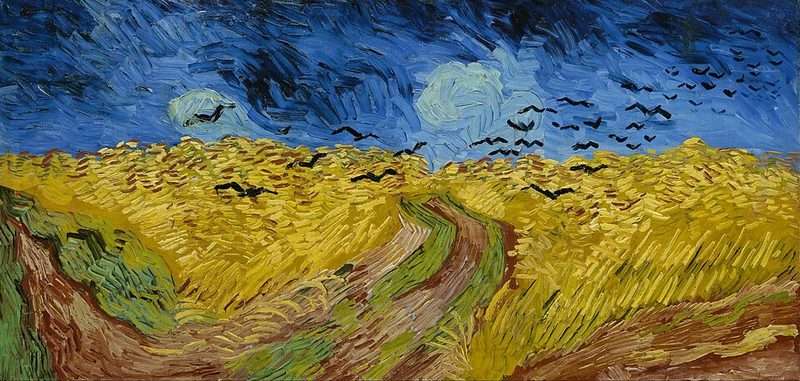
An original painting was made by an artist's own hand, one brushstroke at a time. A print is a copy made by a machine. Both can be beautiful, but only one is the real thing. Here are a few simple ways to tell them apart.
Look at the surface from the side. Oil and acrylic paint leave a real texture: small ridges, thick spots and the marks of the brush. A print is usually flat and smooth, even when it tries to look textured.
Look closely at the colors. With a magnifying glass, many prints show tiny dots in a regular pattern. Real paint has no pattern. The color sits in layers, and you can often see one color peeking out from under another.
Check the edges and the back. On a painting, paint often runs onto the sides of the canvas, and the back may carry the artist's notes, a date or a signature. A printed canvas often looks too clean and too even.
Ask for the story of the work. On Oweili, every artwork shows photos of the painting at 25%, 50% and 100%, taken while it was being made, and comes with a certificate of authenticity. That is the clearest sign of all: you can see the work grow, step by step.
Picture: Vincent van Gogh, Wheatfield with Crows, 1890. Public domain, via Wikimedia Commons.